
29 de mayo de 2025
Cosmic capitalism: how space became the next business frontier
Introduction
Beyond the technological and policy dimensions, the commercialization of space represents a broader cultural and economic shift. Space is no longer seen solely as a scientific frontier but as a platform for business, tourism, communication, and even entertainment.
The success of companies like SpaceX has inspired a new generation of space entrepreneurs and investors. Venture capital funding for space startups has surged, with billions of dollars flowing into satellite networks, launch services, and space-based data analytics. The term “space economy” has entered mainstream discourse, encompassing a wide range of industries from Earth observation to in-orbit manufacturing.
Moreover, the public’s imagination has been reignited. Live-streamed rocket launches, astronaut influencers, and space-themed media have brought space closer to everyday life. This renewed interest has helped build public support for continued investment and exploration.
The dawn of commercial spaceflight marks a pivotal chapter in the history of human enterprise. What was once the exclusive domain of superpower governments has become a vibrant and competitive marketplace driven by innovation, ambition, and collaboration. As private companies continue to push the boundaries of what is possible, space is rapidly transforming from a distant frontier into a dynamic arena of economic activity. This transformation sets the stage for the next chapters of the space economy—where business, policy, and sustainability will shape the future of our cosmic ambitions.
The emerging space economy is a complex and rapidly evolving ecosystem that spans multiple industries, financial models, and legal frameworks. From satellite services that power global communications to visionary plans for asteroid mining and lunar commerce, space is becoming an integral part of the global economy. Investment is pouring in, startups are flourishing, and governments are adapting to a new reality where private enterprise plays a central role in shaping humanity’s future beyond Earth.
The dawn of commercial spaceflight
The commercialization of space, once the realm of science fiction, has rapidly evolved into a tangible and transformative reality. What began as a geopolitical contest between superpowers has now become a dynamic arena for private enterprise, innovation, and investment. This essay explores the historical trajectory that led to the rise of commercial spaceflight, the key players who disrupted the traditional model, and the paradigm shift that redefined space as a domain of economic opportunity.
From Government Monopoly to Private Ambition
For much of the 20th century, space exploration was dominated by state-led initiatives. The Cold War rivalry between the United States and the Soviet Union catalyzed the Space Race, culminating in landmark achievements such as the launch of Sputnik in 1957 and the Apollo 11 Moon landing in 1969. These missions were not only scientific milestones but also symbols of national prestige and technological superiority.
However, the immense costs and risks associated with space missions meant that only a handful of governments could participate. Space was viewed primarily as a strategic and scientific endeavor, with little room for commercial interests. This began to change in the late 20th century, as technological advancements and policy shifts opened the door for private sector involvement.
The U.S. government played a pivotal role in this transition. In 1984, the Commercial Space Launch Act was passed, encouraging private companies to develop and operate their own launch systems. This legislation laid the groundwork for a new era in which space would no longer be the exclusive domain of national agencies like NASA or Roscosmos.
The Rise of NewSpace and Entrepreneurial Visionaries
The 21st century witnessed the emergence of what is now known as the NewSpace movement—a wave of private companies aiming to make space more accessible, affordable, and commercially viable. At the forefront of this movement were visionary entrepreneurs who brought Silicon Valley’s innovation ethos to the aerospace industry.
Elon Musk, founder of SpaceX, is perhaps the most prominent figure in this transformation. Established in 2002, SpaceX set out with the ambitious goal of reducing the cost of space travel and eventually enabling human colonization of Mars. In 2008, SpaceX became the first private company to send a liquid-fueled rocket (Falcon 1) into orbit. Just four years later, it made history again by delivering cargo to the International Space Station (ISS) with its Dragon spacecraft.
Jeff Bezos, founder of Amazon, launched Blue Origin with a similarly long-term vision of enabling millions of people to live and work in space. Though more secretive in its early years, Blue Origin has since made significant strides in reusable rocket technology and suborbital tourism.
Other notable players include Richard Branson’s Virgin Galactic, which focuses on space tourism, and Rocket Lab, a New Zealand-based company specializing in small satellite launches. These companies, among others, have collectively redefined the possibilities of spaceflight, shifting the narrative from exploration to enterprise.
Technological Innovation and Cost Reduction
One of the most significant enablers of commercial spaceflight has been the dramatic reduction in launch costs. Traditionally, launching a payload into orbit cost tens or even hundreds of millions of dollars. This high barrier to entry limited participation and stifled innovation.
SpaceX revolutionized the economics of space by developing reusable rockets, most notably the Falcon 9. By recovering and reusing the first stage of the rocket, SpaceX was able to slash launch costs by more than half. This innovation not only made space more accessible to commercial clients but also forced legacy aerospace companies to rethink their business models.
Miniaturization of technology has also played a crucial role. The rise of CubeSats and other small satellites has enabled universities, startups, and even developing countries to participate in space missions at a fraction of the traditional cost. These small payloads can be launched as secondary cargo on larger missions, further democratizing access to space.
Public-Private Partnerships and Policy Support
Governments have continued to play a vital role in fostering the commercial space sector, not as sole operators but as partners and enablers. NASA, for instance, shifted its approach from building and operating its own spacecraft to contracting services from private companies. The Commercial Orbital Transportation Services (COTS) and Commercial Crew Program (CCP) are prime examples of this strategy.
Through these programs, NASA provided funding and technical support to companies like SpaceX and Boeing to develop cargo and crew transport capabilities. This not only reduced costs for the agency but also stimulated private investment and innovation.
Internationally, similar trends have emerged. The European Space Agency (ESA), the Indian Space Research Organisation (ISRO), and other national agencies have increasingly collaborated with private firms to expand their capabilities and reach.
The Emerging Space Economy
As commercial spaceflight becomes increasingly viable, a broader and more complex space economy is rapidly taking shape. This section explores the key sectors driving this transformation, the financial and investment trends fueling growth, and the evolving regulatory landscape that governs commercial activity beyond Earth. Together, these elements illustrate how space is no longer just a destination for exploration, but a dynamic and expanding marketplace.
The rapid expansion of the outer space economy—driven by private companies launching satellites, planning lunar missions, and developing space-based services—has raised important questions about how antitrust laws should apply beyond Earth. As a few dominant players like SpaceX and Blue Origin begin to control critical infrastructure such as launch systems and satellite constellations, concerns about monopolistic behavior and market access have intensified. Legal scholars and policy experts argue that existing space treaties, like the 1967 Outer Space Treaty, were not designed to regulate commercial competition, leaving a gap in governance that could hinder innovation and fair participation.
To address these challenges, experts propose adapting antitrust principles to the unique context of space. This includes ensuring open access to orbital slots, preventing anti-competitive mergers, and regulating resource extraction on celestial bodies. Economic frameworks must also evolve to balance national interests, private investment, and international cooperation. As the space economy matures, integrating competition law into space governance will be essential to fostering a diverse, sustainable, and innovation-friendly environment beyond Earth
Key Sectors of the Space Economy
The space economy encompasses a wide range of industries, many of which are already deeply integrated into daily life on Earth. These sectors include satellite services, space tourism, resource extraction, and emerging technologies such as in-orbit manufacturing and space-based solar power.
Satellite Services
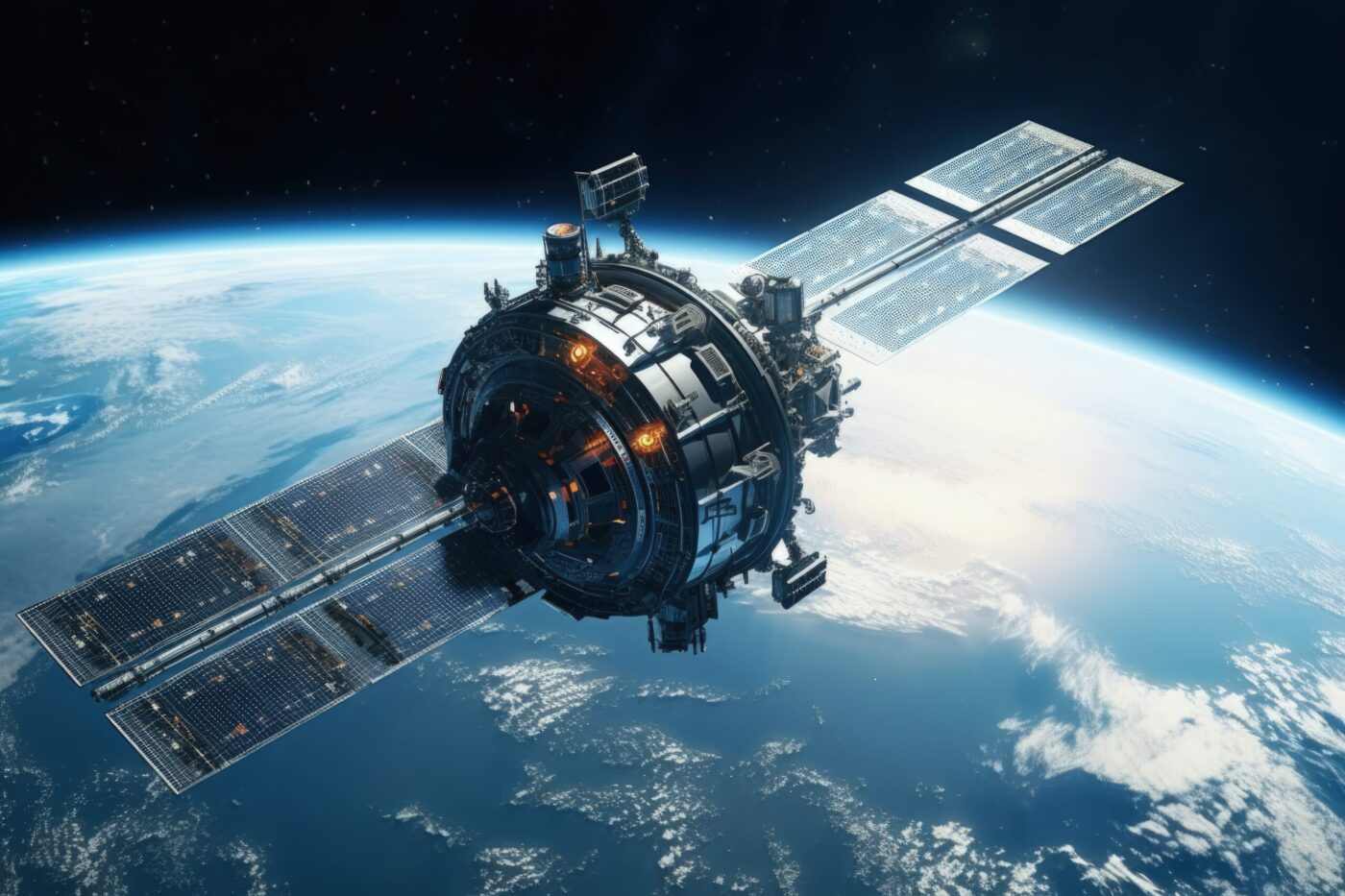
Satellites are the backbone of the current space economy. They provide critical services such as telecommunications, Earth observation, navigation, and weather forecasting. Companies like OneWeb, Starlink (a subsidiary of SpaceX), and Amazon’s Project Kuiper are deploying large constellations of low-Earth orbit (LEO) satellites to deliver global broadband internet. These mega-constellations aim to bridge the digital divide by providing connectivity to remote and underserved regions.
Earth observation satellites, operated by firms like Planet Labs and Maxar Technologies, offer high-resolution imagery used in agriculture, disaster response, urban planning, and climate monitoring. The data economy in space is growing rapidly, with satellite imagery and analytics becoming essential tools for governments and businesses alike.
Space Tourism
Space tourism, once a fantasy, is now a reality for the ultra-wealthy and a near-future possibility for broader audiences. Companies like Virgin Galactic and Blue Origin have conducted successful suborbital flights with civilian passengers. These brief journeys offer a few minutes of weightlessness and a view of Earth from space, marking the beginning of a new leisure industry.
While current prices remain high, the long-term goal is to reduce costs and increase accessibility. Space tourism also serves as a catalyst for public interest and investment in space, potentially paving the way for orbital hotels and lunar excursions in the coming decades.
Asteroid Mining and Space Resources
Though still in its infancy, space resource extraction is a sector with enormous potential. Asteroids contain valuable materials such as platinum, nickel, and water ice. Water, in particular, is a critical resource for future space missions, as it can be used for life support and converted into rocket fuel.
Companies like Planetary Resources and Deep Space Industries have explored the feasibility of asteroid mining, though both have faced financial and technical challenges. Nonetheless, the concept remains a key part of long-term space economy strategies, especially for sustaining human presence beyond Earth.
Investment Trends and Financial Drivers
The growth of the space economy has attracted significant interest from investors, venture capitalists, and institutional funds. According to reports from Space Capital and BryceTech, private investment in space startups has surged over the past decade, with billions of dollars flowing into launch services, satellite networks, and space infrastructure.
Venture Capital and Startups
Venture capital has played a crucial role in nurturing the NewSpace ecosystem. Startups benefit from a more agile and risk-tolerant funding environment, allowing them to innovate rapidly. Many of these companies focus on niche markets such as satellite propulsion, space debris removal, and in-space manufacturing.
Accelerators and incubators dedicated to space technology, such as Techstars Space Accelerator and Seraphim Capital, have emerged to support early-stage ventures. These platforms provide not only funding but also mentorship and access to industry networks.
Public Markets and SPACs
In recent years, several space companies have gone public through Special Purpose Acquisition Companies (SPACs). This trend has provided a new avenue for raising capital and increasing visibility. Companies like Rocket Lab, Astra, and Virgin Galactic have used SPAC mergers to list on stock exchanges, attracting retail and institutional investors.
While SPACs offer opportunities, they also come with risks, including market volatility and pressure to deliver rapid returns. Nonetheless, public listings have helped legitimize the commercial space sector and broaden its investor base.
Regulatory Frameworks and International Cooperation
As commercial activity in space accelerates, the need for clear and effective regulation becomes increasingly urgent. The legal framework governing space is still largely based on treaties developed during the Cold War, such as the 1967 Outer Space Treaty, which prohibits national appropriation of celestial bodies and mandates peaceful use of space.
National Regulations
Countries have begun updating their national laws to accommodate commercial space activities. In the United States, the Federal Aviation Administration (FAA) regulates commercial launches, while the Federal Communications Commission (FCC) oversees satellite communications. The Space Resource Exploration and Utilization Act of 2015 grants U.S. companies rights to resources they extract from celestial bodies, setting a precedent for space mining.
Other countries, including Luxembourg, the United Arab Emirates, and Japan, have enacted similar laws to attract space investment and clarify property rights in space. These national efforts reflect a growing recognition that legal certainty is essential for business confidence.
International Collaboration
Despite growing competition, international cooperation remains vital. The Artemis Accords, led by NASA and signed by over 30 countries, aim to establish shared principles for lunar exploration and resource use. These agreements promote transparency, interoperability, and peaceful collaboration.
Multilateral organizations such as the United Nations Committee on the Peaceful Uses of Outer Space (COPUOS) continue to play a role in shaping global norms. However, the rapid pace of commercial development often outstrips the ability of international bodies to respond, creating a regulatory gap that must be addressed.
The space economy is not a distant dream but a present-day phenomenon with profound implications. The next chapter will explore the challenges that lie ahead—legal, ethical, and environmental—and how they must be addressed to ensure a sustainable and inclusive future in space.
Challenges and the Future of Space Business
As the space economy accelerates, it faces a range of complex challenges that could shape or even constrain its future. These include legal ambiguities, ethical dilemmas, environmental risks, and geopolitical tensions. At the same time, the horizon is filled with bold visions—from lunar bases to Mars colonization—that promise to redefine humanity’s relationship with space. This chapter explores the key obstacles facing space commerce and the transformative possibilities that lie ahead.
Legal and Ethical Considerations
The legal framework governing space activity is outdated and often ill-equipped to handle the realities of commercial enterprise. The foundational document, the 1967 Outer Space Treaty, was designed during the Cold War and primarily addresses state behavior, not private actors. It prohibits national sovereignty over celestial bodies and mandates that space be used for peaceful purposes, but it leaves many questions unanswered.
Property Rights and Resource Ownership
One of the most pressing legal issues is the question of property rights in space. If no nation can claim sovereignty over the Moon or an asteroid, can a private company own the resources it extracts? The U.S. and a few other countries have passed national laws granting companies rights to space resources, but these laws are not universally recognized and may conflict with international treaties.
This legal uncertainty creates risk for investors and companies planning long-term operations in space. Without a clear and enforceable system of ownership, disputes could arise over mining claims, orbital slots, or lunar territory. The development of a coherent international legal regime is essential to ensure fair access and prevent conflict.
Ethical Dilemmas
Beyond legality, space business raises profound ethical questions. Who gets to benefit from space resources? Will space become another domain of inequality, accessible only to wealthy nations and corporations? How do we ensure that space activities respect the rights of all humanity, including future generations?
There is also the issue of cultural and scientific preservation. The Moon, Mars, and other celestial bodies may hold historical or scientific significance. Commercial exploitation must be balanced with the need to preserve these environments for research and heritage.
Environmental and Sustainability Challenges
The rapid expansion of space activity has created a growing environmental crisis in orbit. Space debris, or “orbital junk,” poses a serious threat to satellites, spacecraft, and even human life.
The Space Debris Problem
There are currently over 30,000 tracked pieces of debris larger than 10 cm in Earth orbit, and millions of smaller fragments. These objects travel at speeds exceeding 27,000 km/h, making even tiny particles potentially catastrophic in a collision. Events like the 2009 Iridium-Cosmos collision and anti-satellite missile tests have dramatically increased debris levels.
The risk of a Kessler Syndrome—a cascade of collisions that renders certain orbits unusable—is a growing concern. Companies and governments are developing technologies for debris mitigation and removal, such as nets, harpoons, and drag sails, but these solutions are still in early stages.
Sustainable Practices
Sustainability in space also involves responsible mission planning, satellite deorbiting, and minimizing environmental impact. Regulatory bodies like the FCC and ESA are beginning to require end-of-life plans for satellites, but enforcement remains inconsistent.
On a broader scale, the concept of planetary protection—preventing biological contamination of other worlds—is critical as missions to Mars and beyond become more frequent. Commercial actors must adhere to strict protocols to avoid compromising scientific research or introducing Earth microbes to alien environments.
Geopolitical Tensions and Space Governance
As more countries and companies enter the space arena, the risk of geopolitical conflict increases. Space is becoming a domain of strategic competition, with nations developing military capabilities and asserting influence through satellite networks and lunar missions.
The New Space Race
The U.S., China, Russia, India, and the European Union are all pursuing ambitious space programs. China’s Chang’e lunar missions and its Tiangong space station signal its intent to become a dominant space power. The U.S.-led Artemis program aims to return humans to the Moon and establish a sustainable presence.
While competition can drive innovation, it also raises the risk of conflict. The lack of a comprehensive international governance system for space activities could lead to disputes over territory, resources, or orbital congestion.
The Role of International Cooperation
To mitigate these risks, international cooperation is essential. Initiatives like the Artemis Accords promote transparency and peaceful collaboration, but not all major spacefaring nations have signed on. Strengthening multilateral institutions and updating treaties to reflect the realities of commercial space is a critical task for the coming decades.
Visions for the Future: Moon, Mars, and Beyond
Despite these challenges, the future of space business is filled with extraordinary possibilities. Visionaries and scientists alike are imagining a future where space is not just a frontier, but a thriving ecosystem of human activity.
Lunar Economy
The Moon is emerging as a key target for commercial development. Its proximity to Earth makes it an ideal location for testing technologies, extracting resources, and establishing permanent infrastructure. Water ice at the lunar poles could support life and fuel production, while the Moon’s low gravity makes it a potential launchpad for deeper space missions.
NASA’s Artemis program and private initiatives like Astrobotic and Intuitive Machines are laying the groundwork for a lunar economy that includes mining, construction, and tourism.
Mars Colonization
Mars remains the ultimate goal for many space entrepreneurs, particularly Elon Musk, whose company SpaceX is developing the Starship vehicle for interplanetary travel. Colonizing Mars presents immense technical, biological, and ethical challenges, but it also represents a bold vision for humanity’s future.
A permanent presence on Mars would require closed-loop life support systems, sustainable agriculture, and robust infrastructure. While such a colony is likely decades away, the pursuit of this goal is already driving innovation in propulsion, robotics, and life sciences.
Beyond the Solar System
Looking even further ahead, concepts like interstellar travel, space-based solar power, and orbital manufacturing suggest that space could become a central pillar of the global economy. Advances in artificial intelligence, nanotechnology, and quantum communication may unlock new frontiers that are currently beyond our reach.
Concluding Remarks
The commercialization of space is one of the most transformative developments of the 21st century. Yet, as this chapter has shown, it is not without its challenges. Legal ambiguity, environmental risks, geopolitical tensions, and ethical dilemmas must all be addressed to ensure that space remains a domain of opportunity rather than conflict.
At the same time, the future holds immense promise. From lunar industries to Martian settlements, the space economy could redefine how we live, work, and think about our place in the universe. Navigating this future will require not only innovation and investment but also cooperation, foresight, and a shared commitment to the responsible use of the final frontier.
The transformation of space from a government-dominated domain into a thriving arena for private enterprise marks one of the most profound shifts of the 21st century. What was once the exclusive pursuit of superpowers has become a dynamic, competitive, and increasingly accessible frontier for innovation, investment, and imagination.
Through the rise of commercial spaceflight, the emergence of a diverse space economy, and the bold visions for lunar and Martian development, we are witnessing the birth of a new economic paradigm—cosmic capitalism. This paradigm is not merely about profit; it is about redefining the boundaries of human potential and extending the reach of our civilization beyond Earth.
Yet, this new frontier is not without its challenges. Legal ambiguity, environmental risks, and geopolitical tensions must be addressed with foresight and cooperation. The sustainability of space activities, the equitable distribution of benefits, and the preservation of space as a shared human heritage are critical issues that demand global attention.
As we stand at the threshold of a new era, the choices we make today will shape the future of space commerce and exploration for generations to come. Will space become a domain of opportunity for all, or a playground for the privileged few? Will we build a sustainable and inclusive space economy, or repeat the mistakes of terrestrial exploitation?
The answers lie not only in technology and investment but in our collective vision and values. If guided wisely, the commercialization of space can be a force for progress, unity, and discovery—an endeavor that reflects the best of human ambition and ingenuity.